- Published on
AI Agents vs. Agentic AI: Key Differences and Applications
- Authors

- Name
- Hoang Nguyen

Introduction
Artificial Intelligence (AI) continues its rapid evolution, bringing new capabilities and terminology into the spotlight. Two terms you'll increasingly hear are "AI Agents" and "Agentic AI." While closely related and often used interchangeably, they represent distinct concepts. Understanding the difference is key to grasping the current state and future direction of autonomous AI systems. This post will break down what each term means and why the distinction matters.
What is an AI Agent?
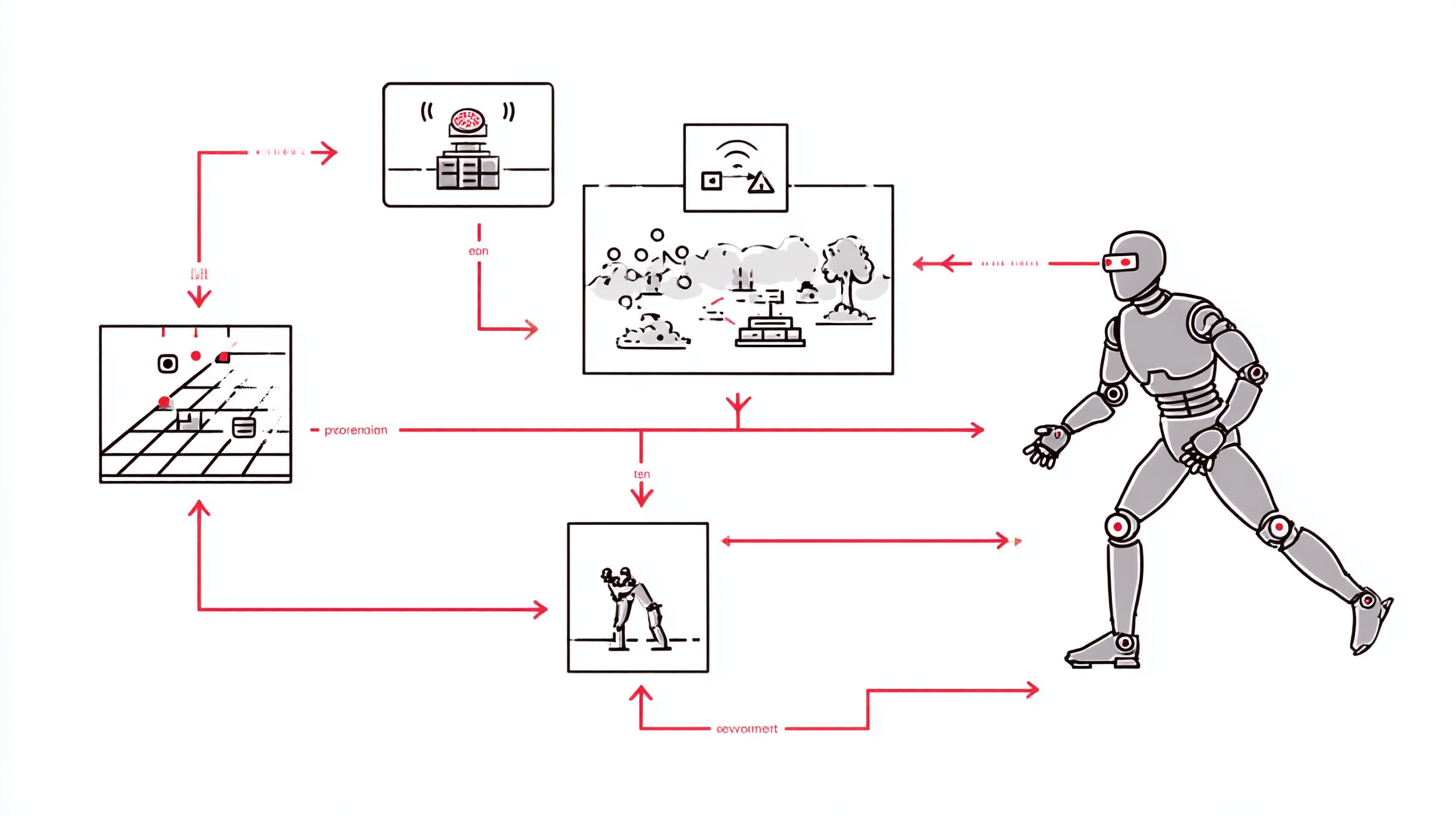
- Definition: Think of an AI Agent as a specific entity or system. It's a piece of software (or hardware) designed with a degree of autonomy to perceive its environment, reason about that environment, and take actions to achieve predefined goals.
- Core Components: Typically includes:
- Perception: How it senses or gathers information (e.g., sensors, APIs, user input).
- Reasoning: How it processes information and makes decisions (e.g., using algorithms, models, knowledge bases).
- Action: How it interacts with or affects its environment (e.g., sending messages, moving a robot arm, executing code).
- Key Characteristics:
- Autonomy: Operates independently to some extent, without constant human micro-management.
- Goal-Oriented: Designed to accomplish specific tasks or objectives (e.g., answer customer questions, win a game level, complete a transaction).
- Reactivity: Responds to changes it perceives in its environment.
- Proactivity (Sometimes): May take initiative to achieve its goals without waiting for specific triggers.
- Examples:
- Customer service chatbots following defined scripts.
- Non-player characters (NPCs) in video games with specific behaviors.
- Simple software bots automating repetitive tasks (e.g., web scraping).
- Smart thermostat adjusting temperature based on rules.
What is Agentic AI?

- Definition: Agentic AI refers less to a specific type of system and more to the quality or characteristic of agency that an AI system exhibits. It describes AI that demonstrates autonomous, goal-directed behavior, often involving more complex planning, learning, and adaptation.
- Core Characteristics (The Essence of "Agency"):
- Higher Autonomy: Operates with minimal human supervision, capable of handling complex, multi-step processes.
- Complex Goal Pursuit: Can understand and pursue high-level, potentially ambiguous goals, breaking them down into sub-tasks.
- Proactivity & Initiative: Takes initiative to achieve goals, not just reacting to inputs.
- Reasoning & Planning: Can strategize, plan sequences of actions, and make decisions based on context and anticipated outcomes.
- Learning & Adaptation: Improves performance over time based on experience and feedback from its environment.
- Interaction & Tool Use: Can dynamically interact with its environment, potentially utilizing various tools (APIs, databases, other AI models) to achieve its objectives.
- How it Differs: While simple AI Agents can be reactive, Agentic AI emphasizes proactive, adaptive, and more independent problem-solving. It's about the degree of intelligent autonomy.
- Examples (Systems exhibiting high degrees of agency):
- AI systems designed to manage complex workflows (e.g., autonomously handling IT incidents from detection to resolution).
- Advanced personal assistants capable of planning multi-step tasks (e.g., booking travel based on preferences and constraints).
- Autonomous systems in research or complex analysis that can formulate hypotheses, design experiments, and interpret results.
- Multi-agent systems where different AI components collaborate to achieve a larger goal (e.g., managing a smart home's energy consumption).
Key Differences Summarized
| Feature | AI Agent | Agentic AI |
|---|---|---|
| Primary Focus | The system/entity itself. | The quality/characteristic of agency behavior. |
| Concept Type | A type of AI system. | A descriptor of AI behavior/capability. |
| Scope | Often refers to specific, task-oriented bots/systems. | A broader concept applicable across various complex systems. |
| Autonomy Level | Varies, can be rule-based or reactive. | Emphasizes higher degrees of independent decision-making. |
| Main Idea | A system built to act towards goals. | AI that demonstrates complex, autonomous, goal-driven action. |
Use Cases Comparison
| Domain | AI Agents | Agentic AI |
|---|---|---|
| Healthcare | Appointment scheduling bots. | AI diagnosing patients and adjusting treatment plans. |
| Finance | Fraud detection algorithms. | Autonomous portfolio management systems. |
| Manufacturing | Assembly line robots. | Self-optimizing supply chain networks. |
Future Outlook
- AI Agents: Will dominate routine, repetitive tasks (e.g., data entry).
- Agentic AI: Expected to revolutionize sectors like logistics, healthcare, and climate modeling through autonomous problem-solving.
Conclusion
While often used together, "AI Agent" and "Agentic AI" have distinct meanings. An AI Agent is the system itself, designed for autonomous action. Agentic AI describes the quality of that autonomous, goal-driven, adaptive behavior. Recognizing this difference helps us better navigate the exciting and complex landscape of increasingly intelligent and autonomous artificial intelligence.
Key Takeaway: AI Agents excel at executing tasks, while Agentic AI redefines how tasks are chosen and optimized.